Why choose lab-grown?
Typically lower prices than comparable natural diamonds can leave more room for the size, colour, clarity or setting you want.

Find your balance of brilliance, size and budget. Start with the essentials, then explore the details that matter to you.
Explore the four Cs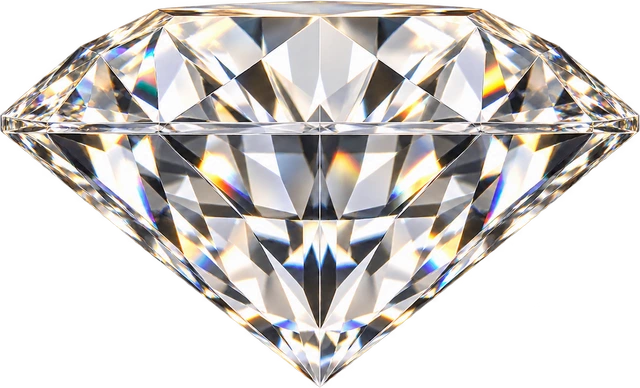
Lab-grown and natural diamonds have essentially the same chemical, physical and optical properties. One grows in a laboratory; the other forms in the earth.
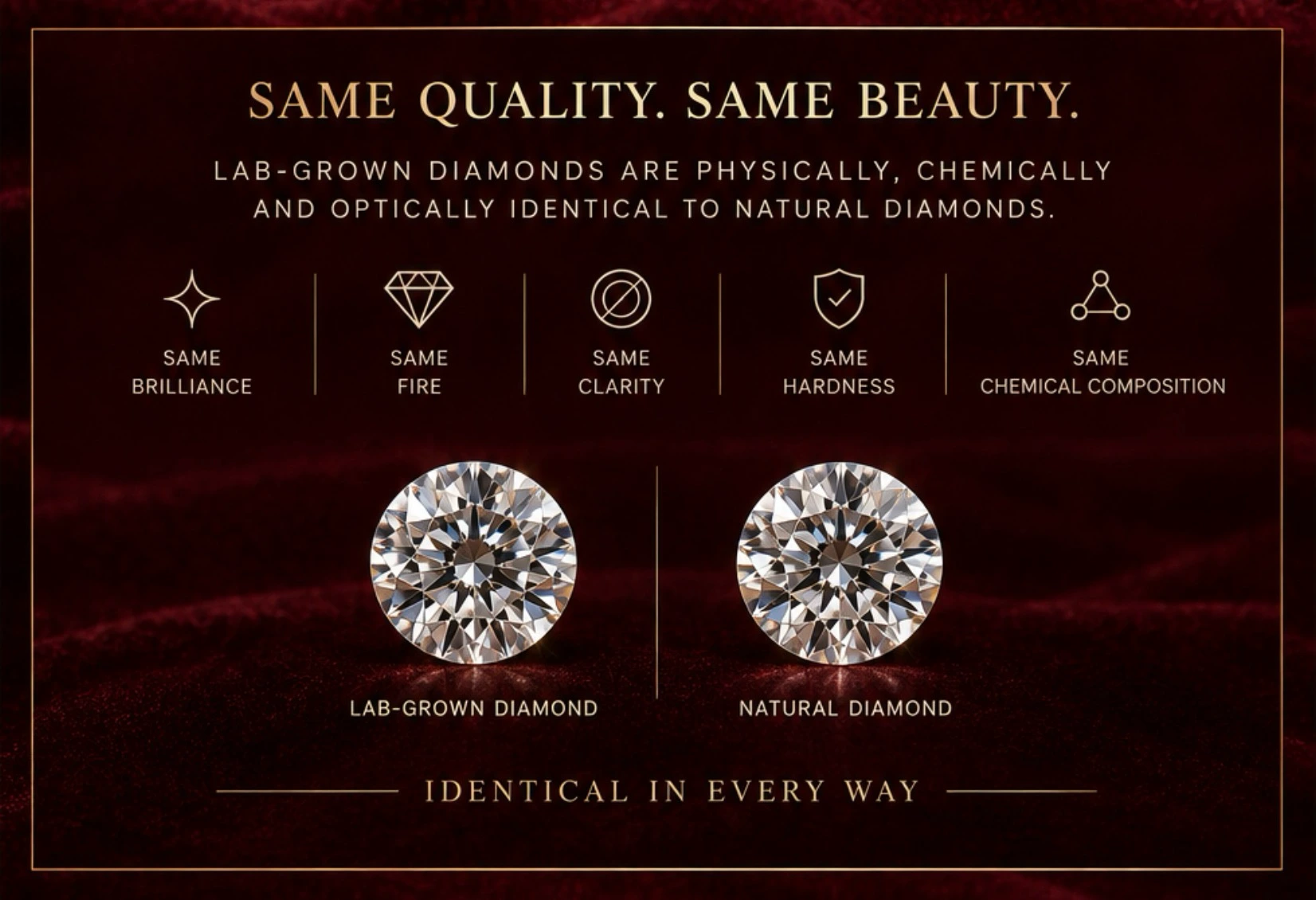
Typically lower prices than comparable natural diamonds can leave more room for the size, colour, clarity or setting you want.
Cut, proportions and the characteristics of the individual stone determine its appearance. Neither origin guarantees a more beautiful diamond.
Material screening is not proof of origin. Both lab-grown and natural diamonds can register as diamond on a thermal-conductivity tester.
Advanced instruments examine growth-related features and spectra to distinguish natural from laboratory-grown diamonds.
Lab-grown diamonds are not cubic zirconia or moissanite. Those are different materials. Your report identifies your diamond’s origin.
How GIA identifies diamond originD is colourless. Warmth becomes more apparent toward Z. Explore the groups to understand the difference.
D sits at the top of the normal colour scale. Colourless under controlled grading conditions, it is a choice for those who prioritise the highest colour grade. Cut, clarity and proportions still determine the complete picture.
Styling exaggerates subtle D–F differences for explanation; all three grades are colourless. The brighter D illustration is not a promise of greater brilliance—cut and lighting also matter. Not calibrated samples; a screen cannot establish a diamond’s grade.
D is the highest grade for absence of colour, not automatically the best purchase for everyone. Shape, size, lighting and metal colour affect appearance. Fancy-coloured diamonds use a different grading approach.
The GIA colour scaleClarity describes internal inclusions and surface blemishes, assessed by a skilled grader at 10× magnification.
Minor inclusions that are difficult to see at 10×.
A small crystal inside the stone. VS1 is a high clarity grade, not the highest.
Enlarged teaching diagrams. Features are deliberately exaggerated to make differences visible on a phone. They are not actual stones, exact 10× views or grading templates. Size, location, nature, relief and number all matter, not just the number of marks.
Not necessarily. FL is the highest grade; I3 is the lowest in this scale. A higher grade may not look different without magnification. “Eye-clean” describes appearance, not a formal grade. Inspect the actual stone and its report.
Clarity grading explained by GIAShape is the outline. Cut concerns proportions, symmetry and polish, and how they influence the diamond’s light performance.
Light can return toward the viewer. Proportions, symmetry and polish all contribute.
Simplified light-path diagrams, not ray-traced simulations or cut-grade assessments.
For standard round brilliants, Excellent is the highest GIA overall cut grade. It considers light performance, design and craftsmanship—not one perfect angle or symmetry alone. Read the grading laboratory’s own scale on your report.
White light returned to your eye.
Flashes of spectral colour.
Light-and-dark sparkle as the stone moves.
Facet alignment and surface finish, each graded separately.
Excellent cut, Excellent polish and Excellent symmetry are separate assessments, often called “triple Excellent”. A diagram cannot certify them.
This scale applies to standard round brilliant diamonds in the normal colour range. Fancy shapes are not all assigned the same overall cut grade. Brilliance, fire and scintillation should be considered together.
GIA’s guide to cutExplore relative sizes from half a carat to four carats. One carat equals 0.2 grams.
Widths follow a single cube-root-of-weight scale for similarly proportioned stones, not actual screen size. Real dimensions depend on shape and cut. At similar proportions, 4 ct is about 26% wider than 2 ct—not twice as wide.
Shape and proportions affect a diamond’s face-up size. Compare millimetre measurements as well as carat weight. Carat (ct) measures diamond weight; karat (k), such as 18k, describes gold purity.
Understanding carat weightTell us the appearance you love and your budget. We’ll help you consider size, cut, colour and clarity together.
Request a design appointmentPrices vary by stone and market. Neither origin guarantees future resale value; laboratory-grown origin alone does not establish a lower environmental impact.
Your gold, your diamond and the documents that connect them to your piece.
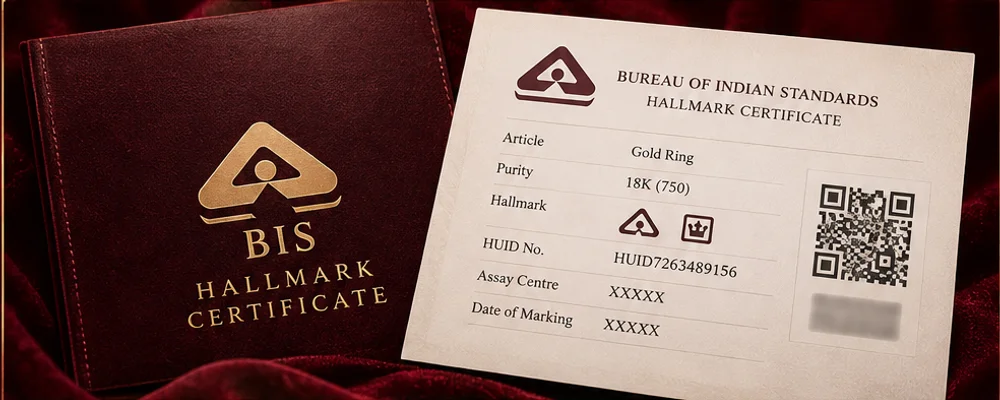
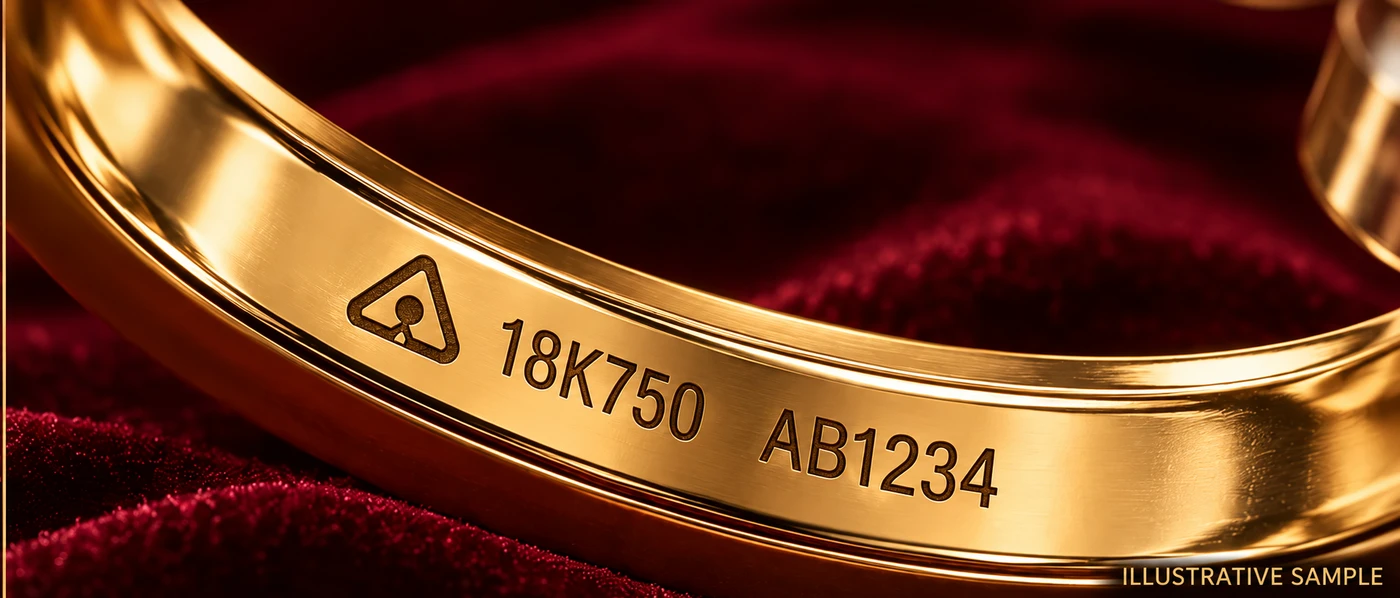
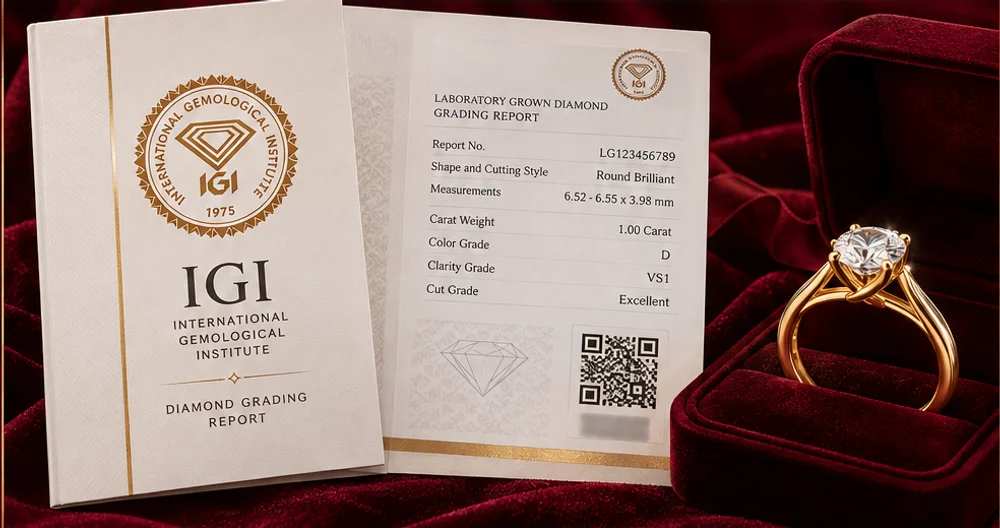
Example documents and markings—not verification evidence. Actual HUIDs have six alphanumeric characters. Review your own report and hallmark before delivery.
The hallmark identifies gold purity. Your article carries the BIS mark, purity in caratage and fineness, and its HUID.
Understand the hallmarkSix alphanumeric characters identify the hallmarked article. Enter the actual code in “Verify HUID” in the BIS Care app.
BIS Care verificationEvery solitaire comes with its own IGI report. Smaller diamonds have supporting certification, reviewed for your specific piece.
Verify your IGI reportNo. Optional initials, a date or a message are personal touches. They do not replace the official hallmark, HUID or diamond grading report.
Bring an idea, a photograph or a sketch.
We’ll help you shape the details.
A minimum of three weeks. Complex designs may take longer.
Collect in Mysore, or arrange delivery. Charges apply outside Mysore.